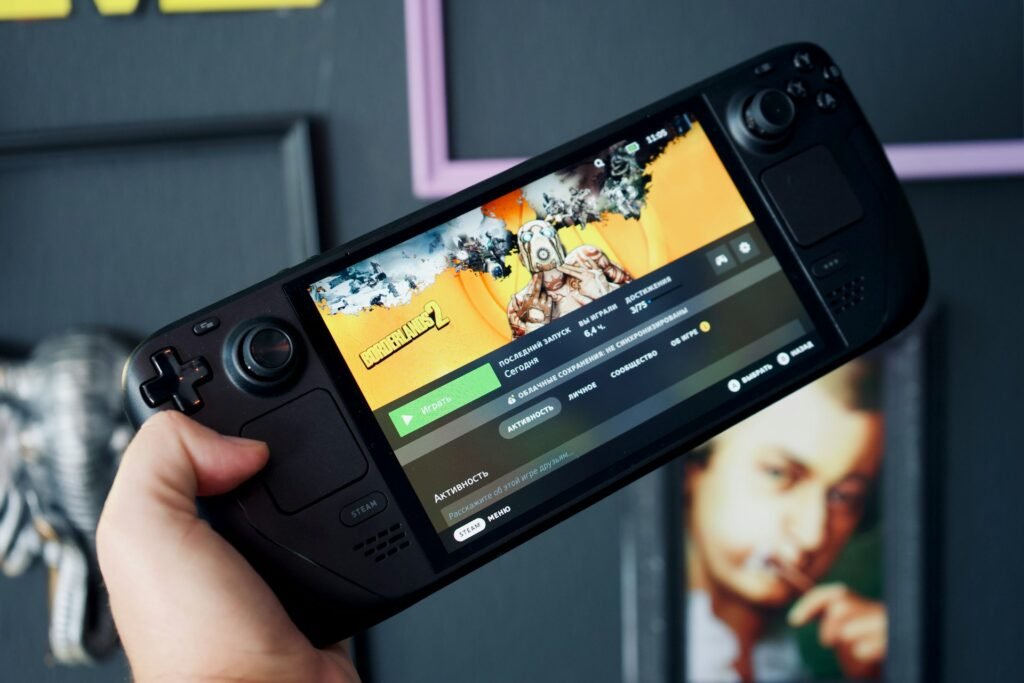

A Steam Machine now costs $100 more than a 1TB Steam Deck.
Sit with that. Valve’s first living-room console in a decade launched on June 29 at $1,049 for the 512GB model — six times the horsepower of the handheld, by Valve’s own claim, for roughly the price gap of a nice microSD card. After the Steam Deck price increase pushed the 1TB OLED to $949, the two devices sit closer on a receipt than they ever will on a benchmark chart.
Here’s the short version if you’re deciding today: the Steam Machine is worth it if you own a serious Steam library and want it on a TV with console manners — and a mediocre deal if you’re shopping on raw performance per dollar, where a budget prebuilt beats it. The rest of this article is who lands on which side, with the launch benchmarks to back it.
What the Steam Machine is (and what it costs)

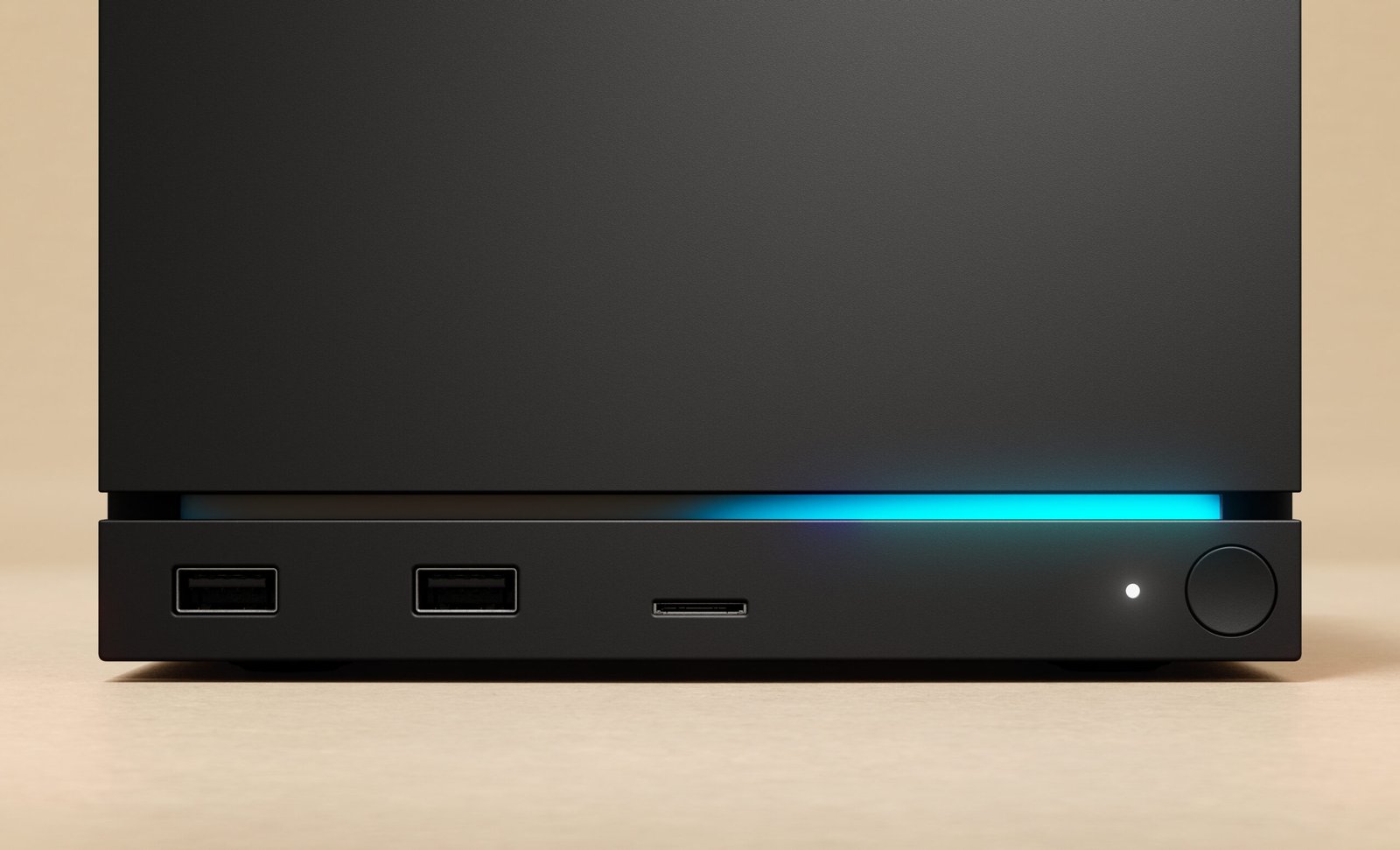
The Steam Machine is a small SteamOS box built for the living room: a semi-custom AMD Zen 4 six-core CPU paired with an RDNA 3 GPU cut down to 28 compute units from the same die family as the desktop RX 7600, with its own dedicated VRAM instead of the shared memory pool that throttles the Deck. It runs the same SteamOS, carries its own Verified badge program, and plays your existing Steam library on a TV.
| Configuration | US price |
|---|---|
| Steam Machine 512GB | $1,049 |
| Steam Machine 512GB + Steam Controller | ~$1,128 |
| Steam Machine 2TB | $1,349 |
| Steam Machine 2TB + Steam Controller | $1,428 |
Note the fine print: no controller in the base box — the Steam Controller is a $79 add-on — and this price is not the one anyone expected. When Valve announced the Machine in November 2025, component math pointed to a $700–800 window. Then the same memory crisis that repriced the Deck did its work: DDR5 contract prices climbed more than 170% year over year, and Valve — which says it sells hardware at component cost rather than subsidizing it the way Sony and Microsoft do — passed the bill along. In its own statement, the company argued that “when companies sell their hardware under cost for competitive advantage” they’re building a closed ecosystem. Principled, and also $250 over the number everyone had budgeted.
How fast is it really?
Fast enough to embarrass a Steam Deck. Not fast enough to embarrass a desktop.
The launch benchmarks landed remarkably consistently across outlets. GamersNexus found the GPU performing closest to an RX 6600, Intel Arc B570, and RTX 3060, with the modern RX 7600 and RTX 5050 sitting roughly 15% ahead — and the whole system pulling a modest 170–180W while gaming because Valve limits the chips hard for thermals. Tom’s Hardware placed it between the RX 6600 and RX 7600 in its own Linux test rig, pulling around 80 fps in Cyberpunk 2077 at 1080p raster, and called the 120mm cooler “truly whisper-quiet” even under load.
The 4K story is where marketing meets physics. Valve pitched this as a 4K60 machine, and PC Gamer got Cyberpunk to a steady ~60 fps at 4K — at Medium settings, with FSR on Performance mode and 2x frame generation doing heavy lifting. Demanding titles at native 4K Ultra are simply out of reach; Avatar: Frontiers of Pandora managed 21 fps. The one genuine break Valve caught: AMD shipped FSR 4.1 for RDNA 3 the same week, so the Machine launched with current machine-learning upscaling rather than waiting on it. Treat this as a superb 1080p/1440p box that upscales to your TV intelligently, and it delivers. Expect native 4K and you bought the wrong thing.
The Deck comparison is the flattering one. Roughly six times the graphics throughput means games the handheld holds at a wobbly 30 fps at 800p run at high-refresh 1440p or upscaled 4K here. Same OS, same library, same save files through Steam Cloud — the Machine is what the Deck looks like when it doesn’t have to fit in a backpack or sip from a battery.
Is the Steam Machine worth it at $1,049?
Depends entirely on what you’re comparing it to — so compare honestly.
Against a gaming PC, the value is weak-to-situational. GamersNexus concluded you could assemble a faster box for the same money or less, and PC Gamer found a budget RTX 4060 prebuilt outrunning it across nearly every benchmark. The RAMageddon wrinkle cuts the other way, though: PC Gamer also priced out its own Arc B570 DIY build and found it now costs more than the 2TB Steam Machine bundle, because memory prices punish small builders hardest. In 2026, “just build a PC” is real advice with an asterisk the size of a DDR5 kit.
Against a console, the math inverts. A base PS5 or Series X runs $600–650 and delivers comparable or better raw grunt — but it plays a PlayStation or Xbox library. The Machine plays the Steam library you’ve been building since college, is a full Linux PC you can do anything with, and answers to nobody’s subscription. Whether that’s worth a ~$400 premium is a question only your Steam account can answer. Mine answers loudly.
My Steam Library has crossed over 200 games just recently and that alone means – “I don’t have to buy games”. Now if you were to get a console, you’d need to buy the top AAA games that most of it you already own in your PC. This is a direct win for getting the Steam Machine.
Who should buy one — and who shouldn’t
Buy it if you’re a Deck owner or PC gamer with a deep library who wants couch play with zero Windows housekeeping: instant resume, automatic Proton, a UI built for a controller, and a box quiet enough to disappear under the TV. Tom’s Hardware’s verdict named exactly this person — the Steam Deck owner who wants a more powerful home system — and the launch reviews back the experience even where they wince at the price.
Skip it if your evenings are Fortnite, Destiny 2, or most Call of Duty. Roughly 90% of the Steam catalog runs through Proton, and the missing 10% is concentrated precisely in kernel-anti-cheat multiplayer — GamersNexus couldn’t even benchmark the F1 games because the anti-cheat refused SteamOS. Skip it too if you’re purely chasing frames per dollar (that budget prebuilt exists), or if your Deck already covers your play and a dock covers your TV nights. And nobody should buy the 2TB tier for storage alone — the $300 jump buys less than a good NVMe drive costs, and the storage is user-upgradeable.
How buying one actually works
You don’t just add it to cart. Valve runs a reservation queue: the first purchase wave was drawn by lottery from everyone registered before June 25, one per household, Steam accounts in good standing only — a scalper countermeasure after the Steam Controller launch got picked clean. Register now on the Steam Machine page and you join the waitlist behind the first wave; GameSpot reports fresh stock may not arrive until 2027. Do not pay a reseller markup on a box whose entire argument is honest component pricing.
Quick answers
Does the Steam Machine play every Steam game? About 90% of the catalog via Proton. The gap is mostly kernel-level anti-cheat multiplayer — Fortnite, Destiny 2, most Call of Duty — the same titles a Steam Deck can’t run.
Is it more powerful than a PS5? In raw GPU throughput it’s in the same neighborhood, slightly behind on paper — the sell isn’t power, it’s that it runs your Steam library and doubles as a real PC.
Do I need to buy the controller? The box ships without one. Any controller you own works over Bluetooth or USB; the $79 Steam Controller adds trackpads and gyro that suit the Big Picture UI best.
Valve spent a decade proving SteamOS could live in your hands. The proof it can live under your TV arrived in the most expensive year PC hardware has had in a generation — six times the Deck’s power, one hundred dollars past its price, and a lottery ticket between you and the checkout button.