

A refurbished Steam Deck now costs more than a brand-new one did in April.
That is the cleanest summary of May 27, 2026 — the day Valve put the Steam Deck OLED back in stock and raised its price in the same announcement. The 512GB model went from $549 to $789. The 1TB went from $649 to $949. That’s a 44% and 46% jump, and the first price increase in the product line’s history.
If you’re deciding today, here’s the short version: the Steam Deck OLED is still the handheld I’d point most people toward. But it’s no longer the automatic budget pick, and depending on your budget and library, a $549.99 Legion Go S, a Certified Refurbished Deck, or simply the 512GB instead of the 1TB is the smarter buy. The rest of this article is the math.
What changed on May 27, 2026
| Model | Price until May 2026 | Price now | Change |
| Steam Deck OLED 512GB | $549 | $789 | +$240 (+44%) |
| Steam Deck OLED 1TB | $649 | $949 | +$300 (+46%) |
Valve delivered the news inside a restock post, blaming rising memory and storage costs. The company stressed that “Steam Deck itself hasn’t changed” — same AMD APU, same 7.4-inch HDR OLED panel, same hardware that launched in late 2023. Only the checkout page moved.
The increase landed worldwide in proportion: £649 and £779 in the UK, €779 and €919 in the EU, CA$1,129 and CA$1,349 in Canada, AU$1,199 and AU$1,429 in Australia.
Two details make it sting more. The Deck had been sold out since roughly February, so there was no window to grab one at the old price — the restock and the hike were the same event. And the $399 LCD model, the machine that built the Deck’s reputation as the affordable handheld, was discontinued in late 2025. There is no cheap tier left to retreat to.
Why the Steam Deck price increase happened
One word, and it’s the ugliest coinage of 2026: RAMageddon.
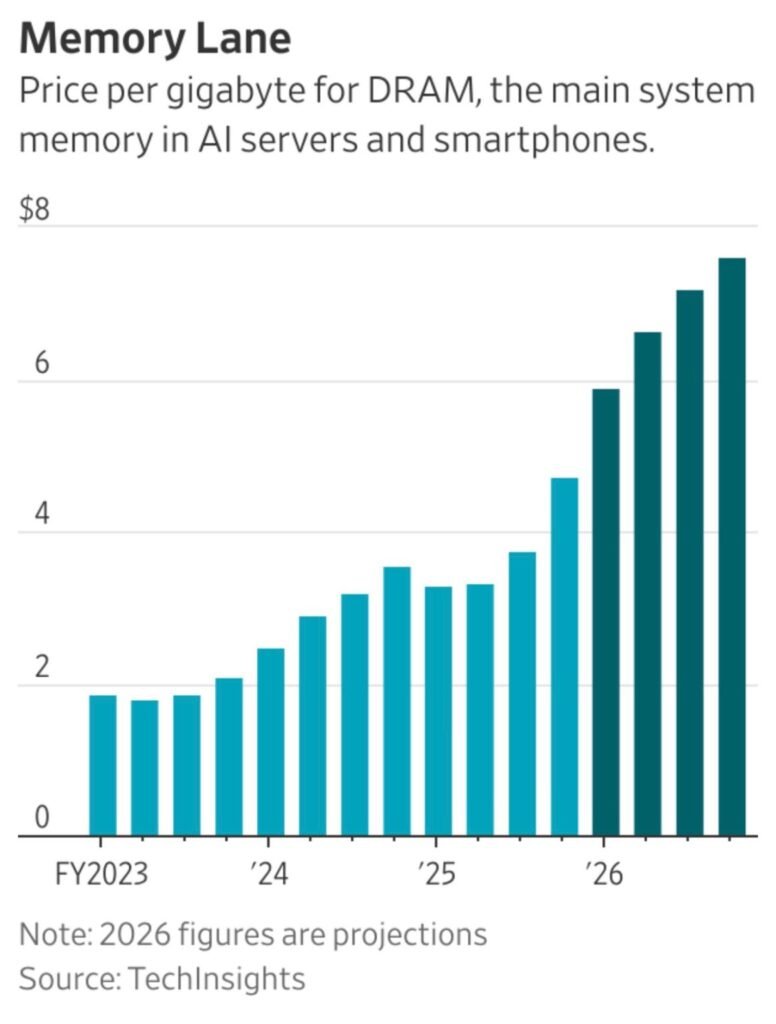
AI data centers are consuming most of the world’s memory output. Samsung, SK Hynix, and Micron have shifted fab capacity toward the high-bandwidth memory that AI accelerators demand — Micron says its entire 2026 supply is already sold out — which leaves everyone else fighting over the leftovers. TrendForce tracked DRAM contract prices rising 90–95% in the first quarter of 2026 alone, then roughly 60% again in Q2, per Tom’s Hardware. Retail RAM kits have climbed hundreds of percent in a year.
A handheld is mostly memory. Sixteen gigabytes of LPDDR5 plus an NVMe SSD sit at the heart of the Deck’s bill of materials, and NAND storage is exactly where costs are running hottest — notice the 1TB model rose more, in dollars and in percentage, than the 512GB.
Valve is also not alone in the penalty box. Sony’s PS5 now starts at $649.99 with the Pro at $899, Microsoft has raised Xbox Series X pricing, and Nintendo will lift the Switch 2 by $50 on September 1 — all covered in the same wave of hikes. Valve itself pushed the Steam Machine and Frame headset past their early-2026 launch window under the same pressure.
How much of this is genuine cost pass-through and how much is margin protection is a fair question to ask of every company on that list. The direction of travel is the same either way.
Is the Steam Deck still worth it at $789?

For most people, yes — with two honest caveats.
What $789 still buys is the best screen at its price (a 7.4-inch HDR OLED; the pricier Ally X runs a 120Hz IPS panel), SteamOS with its instant sleep-and-resume and zero Windows housekeeping, the best-documented game library in the category through the Verified program, trackpads no competitor has matched, and resale value that has historically held up. It also sits a full $210 under the ROG Xbox Ally X.
When I first bought the Steam OLED back when it first launched, it cost me $649 dollars for the 1 TB version. Now the same Steam Deck OLED costs $949 USD which is pretty expensive.
Caveat one: the Deck’s original pitch was being $300–400 cheaper than anything comparable. That cushion is gone. Lenovo’s Legion Go S with SteamOS preinstalled sells for $549.99 — $239 less than the Deck 512GB, running the same operating system on a bigger 8-inch 1200p screen. You trade the OLED panel and Valve’s first-party polish, and you gain screen size and money. Before May, recommending it over a Deck felt contrarian. Now it’s just arithmetic.
Caveat two: the 1TB math broke. The internal storage upgrade used to cost $100; it now costs $160. Buy the 512GB, put the difference toward a microSD card — still the cheaper per-gigabyte route even at today’s inflated NAND prices — and let the card slot do its job.
Skip the Deck entirely if you want maximum frames and Game Pass (that’s the Ally X at $999.99), or if your ceiling is around $550 (Legion Go S, or a refurbished Deck — more on that below).
What the alternatives actually cost now

The hike didn’t happen in a vacuum. Here’s the shelf as of July 2026:
| Device | US price (July 2026) | The one-line take |
| Lenovo Legion Go S (SteamOS) | $549.99 | Cheapest new SteamOS hardware; big screen, no OLED |
| ROG Xbox Ally | $599.99 | Windows entry tier; 16GB RAM, modest chip |
| Steam Deck OLED 512GB | $789 | Best screen-plus-software combo per dollar |
| Steam Deck OLED 1TB | $949 | Same Deck; $160 for storage a microSD does cheaper |
| ROG Xbox Ally X | $999.99 | Most power; has held its October launch price |
| Lenovo Legion Go 2 | ~$1,199–$2,849 by config | Hiked repeatedly; flagship configs near $2,000 |
| Nintendo Switch 2 | $449.99 → $499.99 on Sept 1 | Different library, same inflation |
Look at the Lenovo rows. The original Legion Go climbed from $699.99 to $999, and the Legion Go 2 now sells for roughly double the Ally X after repeated increases, with one 32GB configuration sitting around $2,000 at US retail. Against that backdrop, the Ally X holding its $999.99 launch price is quietly the most impressive number in the table — and the Deck at $789 stops looking like an outlier and starts looking like the middle of a market that moved.
The value tiers have simply been redrawn: budget now means $549–599, the Deck owns the middle, and “premium” starts at four figures.
Buy now, wait, or go refurbished?
Three signals say this pricing won’t retreat soon. Valve’s announcement commits to posting updates if anything changes, and promises nothing more. Memory makers are sold out and warning the shortage could run into 2027 and beyond. And TrendForce’s Q3 forecast has memory increases slowing to 13–18% — slowing because buyers are tapped out, not because supply recovered. Slower increases still point up.
Waiting for a Steam Deck 2 is a worse plan than it sounds. Nothing is announced, and any new hardware would launch straight into peak memory pricing. Don’t budget around a rumor.
The real discount is the refurbished route. At the time of writing, Valve’s Certified Refurbished OLED units list at $629 (512GB) and $759 (1TB) — $160–190 under new, with the same warranty as a new unit.
Stock appears in bursts and disappears fast, so check the Steam Deck page directly rather than waiting for a sale that isn’t coming.
One last data point from this cycle: hikes in 2026 arrive with notice and move in one direction. Nintendo announced its Switch 2 increase weeks ahead, and buyers who moved early saved $50. If a Deck purchase was always a matter of when, earlier has beaten later all year.
Quick answers
Will the Steam Deck price go back down? Valve hasn’t committed to anything beyond posting updates. Memory analysts expect elevated prices into 2027, so treat $789 and $949 as the price, not a spike.
Is the LCD Steam Deck still available? Not new — it was discontinued in late 2025. Refurbished LCD units surface occasionally and remain the only route under $400.
Did the hardware change at all? No. Same APU, screen, and battery as the 2023 OLED launch. Only the price moved.
The Steam Deck spent four years as the cheap answer to an expensive hobby. The answer is still good. It’s just not cheap anymore — and neither is anything standing next to it.